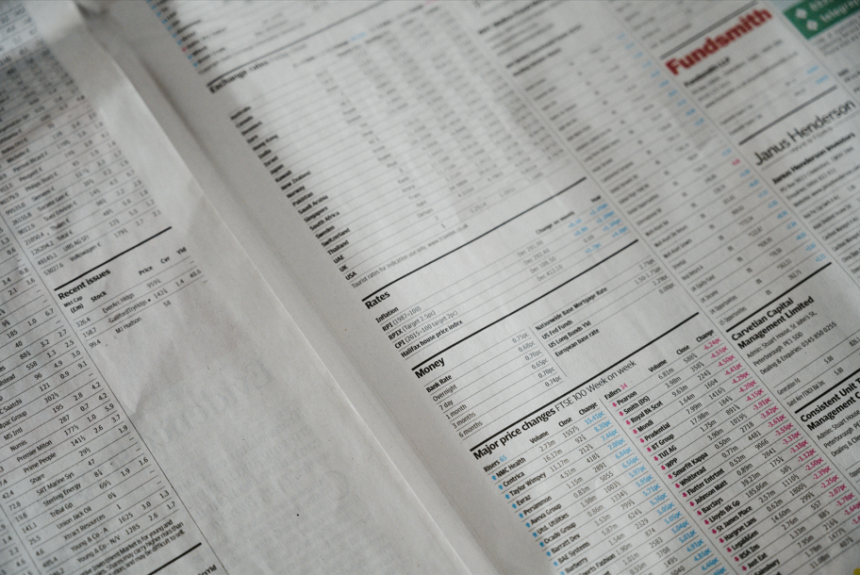

Financial Statements Explained: How Businesses Measure Performance
Financial statements help businesses understand performance, financial position, and cash movement over time. By explaining the income statement, balance sheet, and cash flow statement in simple terms, this guide shows how companies measure results, support decision-making, and maintain transparency with stakeholders.
Financial Statements Explained: Why Numbers Alone Don’t Tell the Full StoryBy DocLex
Every business produces numbers.
Sales come in. Expenses go out. Money moves around constantly.
But here’s the problem:
Raw numbers don’t tell you much on their own.
A business can be profitable… and still struggle.
It can have strong revenue… and still be unstable.
It can look successful… and still be heading in the wrong direction.
That’s why financial statements exist.
They take all that scattered activity and turn it into something structured—something you can actually understand and use.
Financial Statements: More Than Just “Reports”Most people think of financial statements as something accountants prepare once a month or once a year.
Technically, that’s true.
But in practice?
They’re decision tools.
They answer questions like:
- Are we actually making money?
- Are we stable—or just getting by?
- Can we afford to grow?
- Are we heading in the right direction?
Without that structure, businesses are essentially operating on instinct.
And instinct doesn’t scale very well.
Who Actually Uses Financial Statements (It’s Not Just Accountants)One of the biggest misconceptions is that financial reports are only for finance teams.
They’re not.
Inside the BusinessOwners, managers, and executives use them to:
- guide decisions
- monitor performance
- catch problems early
Investors, lenders, and regulators use them to:
- assess risk
- evaluate credibility
- decide whether to trust the business
So financial statements aren’t just internal tools.
They’re also signals.
Signals of stability. Transparency. Control.
The Three Core Financial Statements (And Why You Need All of Them)Most businesses rely on three main reports.
And here’s where people often go wrong:
They look at one—and think they understand everything.
They don’t.
1. The Income Statement: “Are We Profitable?”This is the one most people focus on first.
And for good reason.
It shows:
- revenue
- expenses
- profit (or loss)
Simple question:
Is the business making money?
What It Actually RevealsAt a glance, it looks straightforward.
But the details matter.
RevenueThis is what the business earns from its core activities.
But high revenue doesn’t automatically mean success.
Cost of Goods Sold (COGS)These are the direct costs of delivering your product or service.
Subtract this from revenue, and you get:
Gross ProfitThis tells you how efficient your core offering is.
If this number is weak, the business has a structural problem.
Operating ExpensesThis is where reality kicks in:
- salaries
- rent
- marketing
- admin costs
These are what it takes to actually run the business.
Net IncomeThis is the bottom line.
What’s left after everything is accounted for.
And yes—this is important.
But on its own?
It doesn’t tell the full story.
The Trap: Profit Doesn’t Always Mean StrengthHere’s something that surprises people:
A company can show profit—and still be in trouble.
Because profit is an accounting measure.
Not a cash measure.
And that brings us to the next statement.
2. The Balance Sheet: “Where Do We Stand Right Now?”If the income statement tells a story over time…
The balance sheet is a snapshot.
It shows:
- what the business owns
- what it owes
- what’s left for owners
All built on one equation:
Assets = Liabilities + Equity
What This Actually MeansAssetsEverything the business controls:
- cash
- inventory
- equipment
- receivables
These are resources.
LiabilitiesEverything the business owes:
- loans
- unpaid bills
- obligations
These are commitments.
EquityWhat’s left after liabilities.
This represents ownership value.
Why This Matters More Than People ThinkThe balance sheet answers questions like:
- Are we financially stable?
- Are we over-leveraged?
- Do we have enough resources to operate?
It’s less about performance—and more about position.
3. The Cash Flow Statement: “Do We Actually Have Money?”This is the one people underestimate the most.
And ironically, it’s often the most important.
Why Cash Flow MattersBecause businesses don’t fail due to lack of profit.
They fail due to lack of cash.
You can be profitable on paper…
And still not have enough money to:
- pay employees
- pay suppliers
- keep operations running
Cash from day-to-day business:
- customer payments
- supplier payments
- wages
Cash used for long-term assets:
- buying equipment
- selling assets
Cash related to funding:
- loans
- repayments
- investor contributions
If the income statement says:
“We’re profitable”
But the cash flow says:
“We’re short on cash”
You have a problem.
How These Three Work TogetherHere’s where things come together.
- The income statement shows performance
- The balance sheet shows position
- The cash flow statement shows movement
And none of them work properly in isolation.
Common Mistakes Businesses MakeThis is where things get real.
Looking at One Statement OnlyUsually profit.
And ignoring everything else.
Confusing Profit With CashThis is one of the biggest mistakes.
Ignoring TrendsOne good month doesn’t mean stability.
Patterns matter more than snapshots.
Not Understanding the NumbersHaving reports isn’t enough.
You need to interpret them.
Accrual vs Cash Accounting (Why Timing Matters)Another layer people overlook.
Accrual AccountingRecords income and expenses when they happen—not when cash moves.
Gives a more accurate picture.
Cash AccountingRecords only when money moves.
Simpler—but less precise.
Most growing businesses move toward accrual.
Because it reflects reality more clearly.
Why Standards Exist (And Why They Matter)Financial statements aren’t random formats.
They follow standards like:
- GAAP
- IFRS
This ensures:
- consistency
- comparability
- credibility
Because without standards, numbers can be… interpreted too freely.
Financial Statements and TrustHere’s something that doesn’t get said enough:
Financial reporting isn’t just internal.
It’s about trust.
Investors rely on it.
Banks rely on it.
Partners rely on it.
And if the numbers aren’t clear—or worse, not reliable—
That trust disappears quickly.
Technology Changed Reporting—But Not ResponsibilityModern tools make reporting easier:
- automation
- real-time dashboards
- instant access
But they don’t replace understanding.
Because software shows numbers.
It doesn’t explain them.
Small Businesses: Why This Matters Even MoreThere’s a tendency to think:
“We’re small—we don’t need detailed reporting.”
That’s usually when problems start.
Because small businesses:
- have less margin for error
- rely heavily on cash flow
- need faster decisions
Even simple financial statements can make a big difference.
The Long-Term Value (That Builds Quietly)Financial statements don’t create growth.
But they support it.
Over time, they provide:
- clarity
- direction
- early warning signs
And businesses that understand their numbers tend to:
- adapt faster
- make better decisions
- avoid preventable problems
Financial statements aren’t just about numbers.
They’re about understanding what those numbers mean.
Because in business, activity is constant.
But insight?
That has to be built.
And the companies that build it well don’t just track performance—
They understand it.